
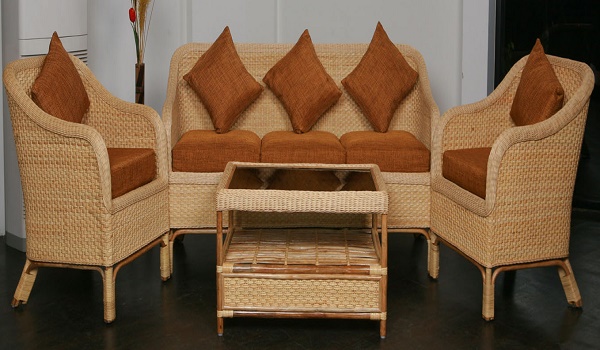
Image Credit: http://broocklieen.com/
Cane furniture of India combines simplicity and comfort, with high aesthetic appeal. Since cane, or bamboo, is of a strong, yet bendable nature, it becomes ideal for making furniture. The origin of the Indian Cane furniture can be traced back to as early as the 2nd century AD. Today, bamboo is used in almost every type of furniture, like chairs, tables, sofas, stools, shoe racks, bookshelves, cabinets, beds, couches, recliners, etc. Indian Bamboo furniture is available in different price ranges, suiting almost every budget.
The flexibility, strength, abundance, firmness and quick maturity of bamboo have made it very popular choice for making furniture. Wicker furniture of India is now being substituted for wooden ones and its attractiveness is increasing at a fast pace. From offices to homes to restaurants to shops, it is being used in each and every place. Cane furniture of India, though natural in its appearance, lends a very modern and trendy look to the entire décor. The durability, low weight, easy maintenance and environmental-friendliness of the furniture further add to its charm.
However, there are a number of drawbacks of the Indian Cane furniture. Firstly, it cannot be used along with wooden furniture. Secondly, one cannot leave it outside in rainy season.
Making Cane Furniture
The first step in the process of making Indian Bamboo furniture is heating of the bamboo/cane. Thereafter, it is molded into various shapes by hand, thus making the component parts. These components are attached together, using glue or screws, to create the frame. Then, the joints are wrapped with binding. Dying of the furniture follows soon after. Finally, a coat of lacquer is applied to it. Wicker furniture of India is also treated against parasites.